maanantai 20. huhtikuuta 2015

Managing investor relations


How to communicate with investors?


There are several different ways for a company to communicate with its investors, these can be monthly reports containing P&L (performance and loss) information, that give detailed snapshots of the company at that time. Another good strategy is to have monthly conference calls with the investors. It would be wise to have the conference calls and reports done at the same time, so if the investors have any questions about the report, that is the time they can ask those. DUring the conference calls it is also a good time to brainstorm ideas and share ideas. The third and most effective communication strategy is to hold annual, quarterly or monthly meetings with the investors. The investors often want to meet face-to-face and see the operational side of the business and this gives them the opportunity to do so. It should be remembered that scheduling these meetings well before hand is essential and they should not be held too often. If these meetings are held on a monthly basis, it best to actually have them every 5 or 6 weeks, not 4, to give time for stuff to actually happen. It is also recommended to have about 8 meetings per year, and not hold them during august and december, because of the traveling schedules of people.

How to build trust between a company and investors


1. Know when to disclose to the market.

2. Admit when things don’t go to plan.

3. Build relations with investors in good times as well as bad.

4. Be transparent about sources of funding.

5. Be consistent with investment criteria.

6. Give investors exposure to a broader group of individuals.

7. Bear in mind the local competition.

8. Articulate a “Plan B.”

9. Avoid surprises.

The best way to build trust with investors is to have good investor communication. Hold well planned board meetings and keep the investors up to date. Avoid surprises and be honest with the investors, let them know about any difficulties and do not keep secrets. 

How do share-/stakeholders influence corporate strategy?


Shareholders of a company have a huge say of the aims of a company. The main thing that they are concerned about is making profit, and this shows in their actions. They make clear profit objectives that they expect to be met. They are also typically short-term oriented and want to make profits quickly. The pressure from shareholders can affect the decision making of managers. Shareholders also vote on major corporate decisions. Shareholders can also influence the strategic planning of the company and for example put cutting costs before ethical issues.


Managers influence a company all the time with their decisions. They decide what to produce, and who to hire and fire. They also decide about company policies and make strategies that affect the profitability of a business.

Employees can influence the success of an organization by their productivity and efficiency in the job, duties and tasks they do everyday. If they disagree on working conditions or pay, they can also go on strike.

Suppliers can raise prices for orders and their reliability can affect production and delay the shipping of finished goods for customers. Suppliers can also change credit terms which may have cash flow issues for a company and they could decide whether or not to allow discounts for bulk orders or loyal customers.

Government can introduce new laws that can affect operations, such as minimum wage or they can raise taxes which would have an effect on firm's profits.

Customers can influence a company by their purchasing decisions 

Banks influence companies by giving or denying loans and charging interest rates.

Local Community can have an influence in a company, by for example petitioning against their new developments or building permissions.

Examples of Investor Relations communication


Websites:


Sources:

http://www.forbes.com/sites/patrickhull/2013/10/16/choosing-the-right-strategy-when-communicating-with-investors/

http://www.businessinsider.com/how-to-communicate-well-with-your-investors-between-board-meetings-2010-5?IR=T

http://www.ey.com/GL/en/Issues/Managing-finance/CFO---A-tale-of-two-markets---Top-investor-communication-tips-for-CFOs

http://www.bbc.co.uk/bitesize/higher/business_management/business_enterprise/business_contemporary_society/revision/10/

http://smallbusiness.chron.com/shareholders-affect-business-65880.html

http://www.entrepreneurship.org/resource-center/managing-a-mailorder-marriage-building-trust-with-your-vc-investor.aspx

tiistai 7. huhtikuuta 2015

Social media as a marketing channel


How to measure the impact/ROI on social media?

To successfully measure the impact of an social media campaign it is important to firstly have a clear understanding of your goals. What do you want to do and what do you want to get. Then create metrics to measure those goals. For example if you want to get website visits, track URL clicks. After you have chosen your metrics, you have to find the right  tools to follow those metrics. There are tons of different kind of tools to measure them, like google analytics and  My top tweet. The next important step is to report and monitor the results. The results can be used for benchmarking for future campaigns. Results can be easily compared to competitors using the same tools.  The final step is of course to repeat the process to get more data and adjust the campaign according to the gained results to make it better


How to choose/use the right media platform?

The most important thing to consider when choosing the right social media is to find out which platform does your target audience use. other things to think about when choosing the right platform are money and time, which platform gives the best return. As it can be time consuming and expensive, it is important to also consider wether to outsource or do it in-house. Another thing to decide is what kind of content are you going to produce. For example Instagram is only pictures, Twitter only lets you use 120 characters, Facebook has both pictures and text, but is loosing popularity. Using multiple different social medias can be too time consuming. If using multiple different social medias it is smart to choose those ones that can be integrated.

How to strengthen the brand via social media?


  • Reputation management
    • Consumers talk about everything in social media and it is important for companies to be able to participate in to those conversations. Possibility to turn negative things in to positive.
  • Customer service
    • Social media has become one main methods for customer service and consumers often contact companies through their Twitter and Facebook
  • PR
    • Send your messages directly to your target groups
  • Brand communities
    • Activate customers and fans and interact with them


Trends and examples

Successful social media campaigns: 


Sources:
https://blog.kissmetrics.com/social-media-measurement/

http://www.forbes.com/sites/dailymuse/2012/08/22/4-ways-to-measure-your-social-media-success/

http://www.inc.com/michelle-manafy/how-to-choose-the-best-social-media-sites-to-market-your-business.html

http://www.socialmediatoday.com/content/how-do-you-choose-right-social-media-platform-your-business

http://blog.wishpond.com/post/72672192941/social-media-marketing-which-platform-is-right-for

tiistai 31. maaliskuuta 2015

Why companies use media agencies?

What is the process of interaction between a client company and a media agency?

No two media agencies have exactly the same work flow process, but according to multiple sources they do follow usually the same pattern:


  1. Receiving a brief or a project assignment from the client
    1. The clients marketing department details their marketing and business objectives to the agency
  2. Strategic development. Seek understanding of the key group they need to influence.
    1. Can be done for example talking with the customers, conducting questionnaires and market research.
    2. Research consuming and media usage behavior of the key target group
  3. Working closely with the client to develop and idea and a media plan for them to use


How do media agencies make use of big data to get consumer insight? 


Using Google Trends can be used easily to get to know trending topics and to know how often a specific searches are made in google. With this tool marketers and media agencies can easily see what is trending in different parts of the world at the moment.

Using digital information in defining an ICP (Ideal Customer Profile). Many sites give an option to sign in with your social media account to define your age, gender nationality, etc. This information is then linked to your behavior on the site, and when this kind of information is collected from all the users using the site, the company can easily define their ideal customers.

Media agencies can also use data collected by another party, such as Facebook. This year researchers from the University of Cambridge and Stanford university did a research that concluded that Facebook can actually predict our personality and behavior better than our family and friends. This is why using Facebook advertising can be really effective.


What is  PESO?


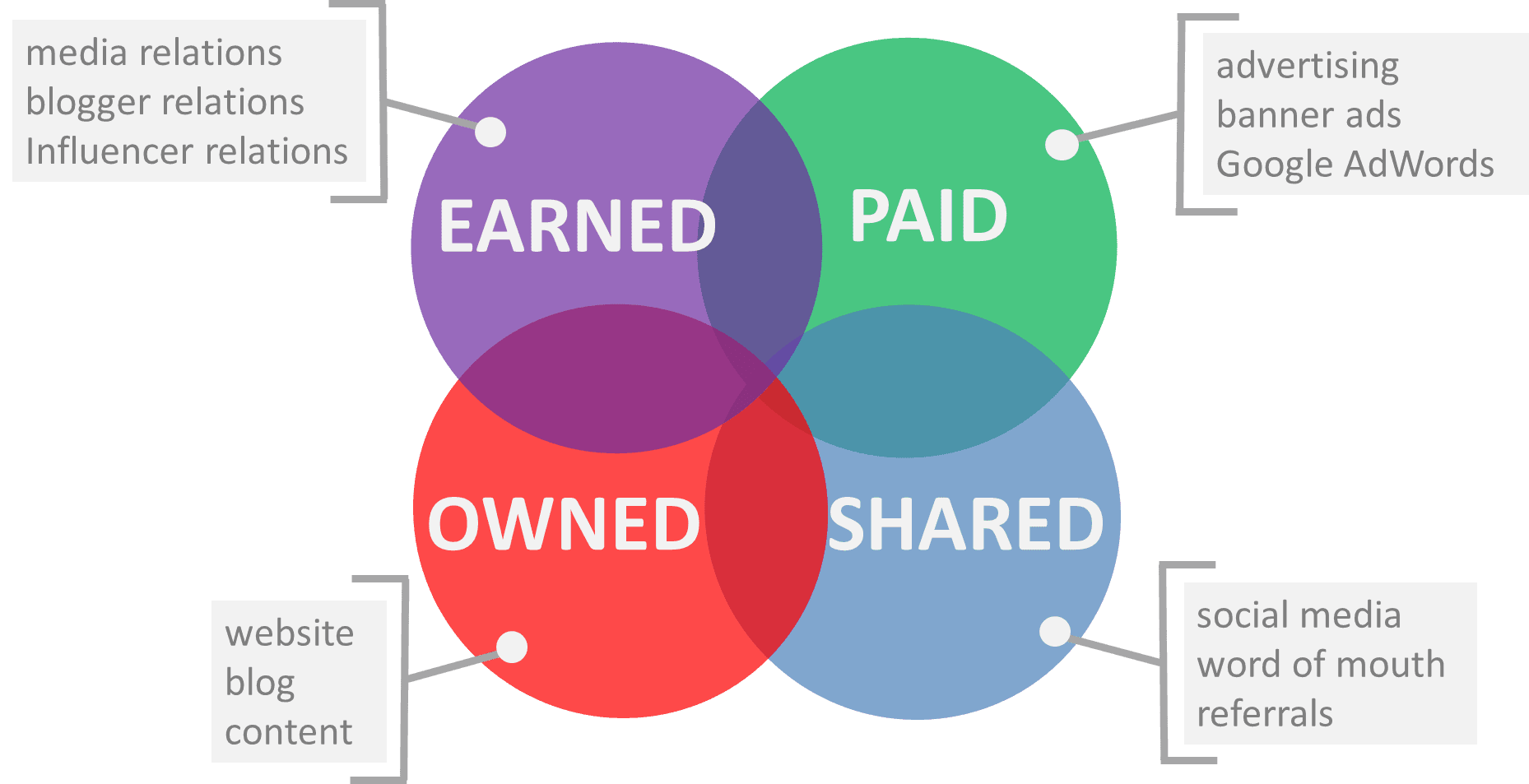
Paid Media: Includes media a company paid for, like google AdWords, Facebook sponsored posts, outdoor advertising, website banners, TV commercials, etc. As paid media costs money, it should be well planned and implemented. Using accurate key words and content. Paid media is mostly used to gain visibility and attract new customers and strangers.

Owned Media: Includes company websites, blogs and other content created by the company like news letters. Owned media is mostly used to keep control of the brand and to inform and attract existing customers.

Earned Media: Includes social media reviews, blog posts, written articles. Companies can hire a PR agency to create an ad campaign that becomes viral and people start to talk and write about it online. These articles, blog posts etc. resulting from the campaign are called earned media. 

Shared Media: Includes social media activity and the sharing happening there. Can also be a marketing campaign that includes customers or fans, for example to pick a new flavor etc. for a upcoming product. Gets existing customers, followers and fans to share and do advertising on behalf of the company


Programmatic advertising article:
http://digiday.com/platforms/what-is-programmatic-advertising/


Sources:

http://www.mediacom.com/en/what-we-do/our-industry/media-agencies/how-does-a-media-agency-work.aspx

http://www.marketing.org.au/?i=EYK/Z0vgN6Y=&t=jZS6ngCVPug=

http://blogs.salesforce.com/company/2014/11/5-ways-marketers-can-actually-use-big-data-gp.html

http://www.forbes.com/sites/danielnewman/2015/02/24/big-data-why-facebook-knows-us-better-than-our-therapist/

http://news.stanford.edu/news/2015/january/personality-computer-knows-011215.html

http://www.matternow.com/news-views/prwhiteboard/whats-the-difference-between-paid-owned-and-earned-media/

tiistai 17. maaliskuuta 2015

PBL 6: What does a communication plan involve?

Definition of communication plan by business dictionary:

Step by step process to ensure that the intended message is received, understood, and acted upon by the recipient. It involves: determining the objectives, choosing the audience, and selecting appropriate channels to reach them.

Different communication models

According to wisegeek.com, there are typically three different kinds of communication plans

1.  Internal business communication plan
- Only for stakeholders inside the company, like owners, managers and employees. Different communication methods in this plane could be telephone, email, conferences and face-to-face meetings. Might contain sensitive information.

2. External business communication plan
-Opposite of internal, used by external stakeholders who need information.

3. Crisis communication plan
-Only used when a crisis occurs to inform stakeholders about the crisis, how the company is going to handle it, and maintain normal business operations.


Trends in communication

Business communication follows normal communication trends, such as social media and instant messaging, but on top of that it also has its own trends. Some of the trends mentioned online are:

  • BYOD (Bring Your Own Device)
    • Many people work and need to access company information remotely, so communication should be seamless with all devices, such as smart phone, tablet, computer.
  • JOC (Join Our Cloud)
    • Follows BYOD, as companies are not device centric, they focus on improving their platforms.
  • Transition from print do digital
  • Videos in internal communication
    • Can be watched when ever. Many companies taking a YouTube kind of approach with a video library with the possibility to comment, tag, share and upload.

How to measure success of communication plan

How to evaluate a communication plan:

  • Transmission
    • Was the information received by the right party?
      • verifying that the message was received.
  • Understanding
    • Was it interpreted the way the sender wanted?
      • Avoid "broken phone" or "grape vine" effect
  • Satisfaction
    • Where the receivers/customers satisfied?
      • Timing, mode of communication
Some experts also say that communication should be 
  • Minimalist (As short as possible without losing important things)
  • Automated if possible (Easier to monitor and share)
  • Local (meet the needs of specific target audience)

Sources:
http://www.isae.org/wp-content/uploads/2013/06/Crisis-Communications-795x1024.jpg?821bdd
http://www.wisegeek.com/what-are-the-different-types-of-business-communication-plans.htm
http://www.newsweaver.com/5-internal-communication-trends-watch-2015/#.VQiKsmSUeso
http://www.itbusinessedge.com/slideshows/top-five-business-communications-trends-for-2014-03.html
http://www.businessdictionary.com/definition/communications-planning.html#ixzz3Ug3AEVZE
http://www.commpro.biz/marketing/integrated-marketing/planning-success-14-top-pr-integrated-marketing-communications-trends-2014/
http://www.medscape.com/viewarticle/744865_7
http://toolkit.pellinstitute.org/evaluation-guide/communicate-improve/evaluate-your-communication-efforts/

tiistai 10. maaliskuuta 2015

PBL 5: How to create a brand strategy?

What kind of brand strategies exist 


From the website cpfq.com I could find the following different brand strategies:

New model strategy
a system to promote both products and services by way of a new brand. Used a lot for example by mobile phone manufacturers, such as Apple and Samsung (iPhone & Galaxy)

Line extension method

A method where a new variant of an existing product is added, for example shampoo manufacturer may have different shampoos for dandruff, greasy hair, etc.

Brand extension system

A method where a brand with a well developed image uses the same brand in a different product line. A good example of this is the Virgin group, that started as a record label and now manages also transportation, food and drink and telecommunications. It has more than 100 companies under it.

Multi brand name strategy

A company launches multiple different brands with apparent competition with its own existing products to get more of the market share. The best example of this is Procter & Gamble (P&G) 


When to outsource/not to outsource 


In an article written by Ilya Pozin in forbes.com, mr. Pozin discussed outsourcing marketing with marketing expert Erik Huberman. In the article it was said that when you do not have the talent or the possibility to hire needed talent for marketing and branding, then is a good time to start thinking outsourcing. When building a company, and this goes especially for young brands, it is important to stick to your core competencies, the things you are good at.

On the contrary if you have in house talent and a marketing/branding team that is dedicated, skilled and you trust, then there is no point outsourcing, and it can even be harmful. The people in the company know the products the best, so if they have what it takes, they should be the ones responsible of branding.

Pros and cons of brand outsourcing were listed in designshack.net:


PROS:
Saves time
Gives a fresh perspective
Saves from errors if you are not good in branding.


CONS:
Credibility issues
It isn't "you"
Costs a lot of money


What is the interrelation between brand strategy and brand portfolio


Brand strategy and brand portfolio usually go hand in hand. The company decides the way they want to go and create a strategy to support their portfolio according to that.

Flemming Hansen and Lars Bech Christensen mentioned in their book Branding and Advertising (2003) that the bigger the brand portfolio gets, usually the importance of the corporate brands lessens. A good example here is P&G. Most of the consumers using P&G products may not even know that they belong to the P&G portfolio.

On the other hand there are some companies, such as Virgin, that uses the brand extension method, and keeps its own name on the brands it creates, so that everyone recognizes the brand.


Sources:


http://www.businessdictionary.com/definition/brand-strategy.html
http://www.cqfp.org/2013/04/types-of-branding-strategies/
http://www.forbes.com/sites/ilyapozin/2014/04/23/leave-it-to-the-experts-should-you-outsource-your-marketing/
http://designshack.net/articles/business-articles/outsourcing-your-own-brand-pros-and-cons/
Hansen, F. and Christensen, L. (2003). Branding and advertising. [Copenhagen]: Copenhagen Business School Press.

tiistai 24. helmikuuta 2015

How to manage brand identity

Brand Identity

Brand identity is how a business wants its logo, communication style and visual elements to be seen by consumers. Brand identity shouldn't be confused with brand image, which is what consumers actually think. (1)

What is the interrelation between brand identity and brand image? 


Brand identity is placed on the company's side and includes everything that makes a brand meaningful and unique. These things influence the customers brand image. For the consumer to fully understand the meaning of the company's marketing communication, it is important that the brand identity and the brand image match each other. (2)


When and how to rebrand? ­ 

There are a lot of different situations when a company has to start thinking rebranding.

When a company starts to grow and becomes a mid-sized or a large company and wants to be taken seriously, it should try to make its brand more professional, as it expands in to more aggressive markets.

If there is a change in the product or service, for example switching in to a more greener solution, it should show also in the company's brand.

When a company wants to differentiate itself from competitors, rebranding can help significantly.

When the markets change and the company wants to stay relevant.

When a company wants to introduce a new competing product to a different market while retaining the original product brand, they might consider rebranding.

If a large company develops or acquires various products and services, it might become a confusing clutter of multiple different brands. In this situation it is beneficial to create a new brand which has all these smaller ones under it or included in it. (3)


risks and challenges? ­ 

When rebranding there is a risk that a company creates a hope of change when in reality there are no concrete changes. (4)

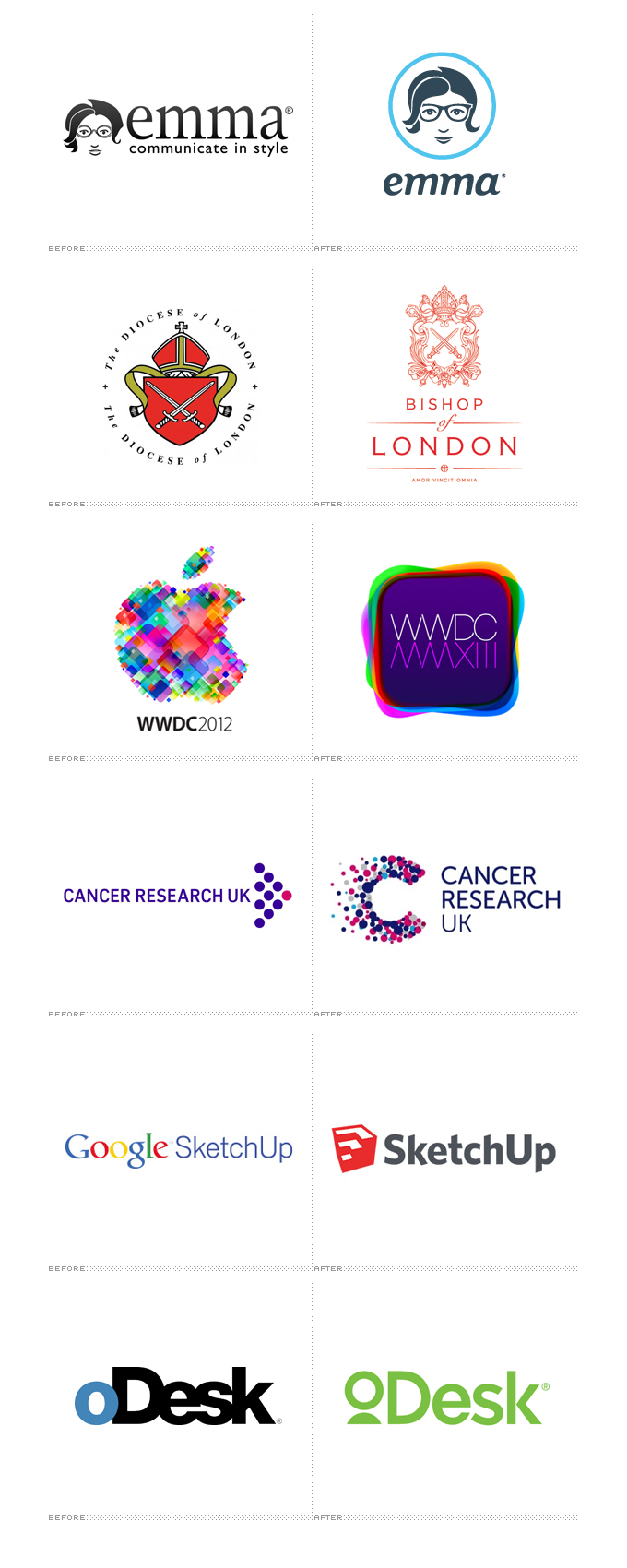
Another big challenge in rebranding is how the consumers perceive your new brand. There are multiple good examples of companies getting laughed at and criticized because for example their new logo. The latest that comes in mind is Airbnb, which changed its logo and it was mocked in Twitter with people saying that the new logo looks like a sexual organ. (5)

Another big risk is that when rebranding goes too far, and consumers don't recognize the company's logo or name anymore, and cant associate them with the good sides of the company. This can also be done on purpose, when the negative effects can be smaller than the positive ones.


Good and bad examples of brand management.


Good examples:

Google is using its visual brand identity well in all of its products:


25 examples of good branding:
http://www.hongkiat.com/blog/identity-branding-design-part-2/


Bad examples:

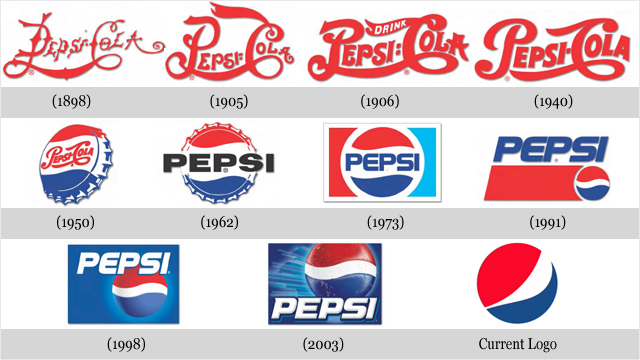
Pepsi is going more boring each year:


Ikea removing women in Saudi Arabia:


References:

http://www.investopedia.com/terms/b/brand-identity.asp

http://www.diva-portal.org/smash/get/diva2:530562/FULLTEXT01.pdf

http://www.inkredible.com.au/Rebranding/reasons-to-rebrand

http://www.retailcustomerexperience.com/articles/experts-discuss-dos-and-donts-of-rebranding/

http://skar.com/hazards-rebranding/

tiistai 10. helmikuuta 2015

Trigger 3: Visual Brand Identity


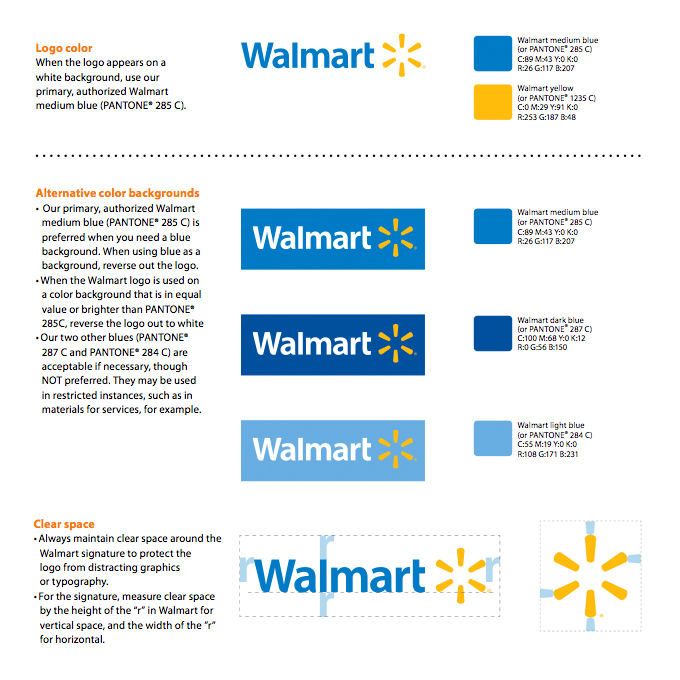
To start this subject I think it would be good to define what is corporate identity. The definition by Wikipedia states that a corporate identity is the overall image of a corporation, in the minds of public. Maintaining the corporate identity is the main task of corporate communication department. It usually shows through branding and the use of trademarks. (1)

Then off to visual identity. Again according to Wikipedia, corporate visual identity expresses the values and ambitions of an organization, its businesses, and its characteristics. It provides the company: 
(1) visibility and recognizability, 
(2) symbolizes the organization for external stakeholders, 
(3) it expresses the structure of an organization to its external stakeholders ( monolithic brands for companies with single brand, different brands for an organization, and endorsed identity with different brands which are connected.)
(4) It relates to employees' identification with the organization as a whole. (1)

Elements that create visual brand identity


Using specific colors are one of the most recognizable elements of a visual identity. A good example of using corporate color is Coca-Cola. 


Even though we do not understand all of these languages, most of us would probably think of Coca-Cola when seeing these somewhere.

Other elements of visual brand identity can be for example sound (Battery energy drink), shape (Apple products), typography, materials. These elements communicate company values and personality to stakeholders either directly or subliminally.


Creating a visual brand identity

Designing a Brand Identity by creativemarket.com


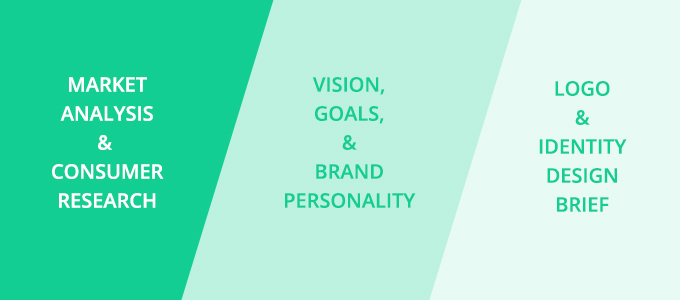
Phase 1: Research, Vision & Design Brief


Research questions: 
  • How is the brand perceived against competitors?
  • What is the brands positioning statement? (answer what, how, to whom, where and why)
  • What is the heritage of the product type and the origin of it's ingredients and fabrication process?
  • Who is the audience?
  • What are the values and beliefs of the brand about business and its mission in the world? (how would it look, act and talk if it was a person?)
  • What benefits do customers associate with the brand?

A design brief should contain the research results in brief, including target audience, messaging objectives, values and mission of the brand, and the brand's products/services offering.

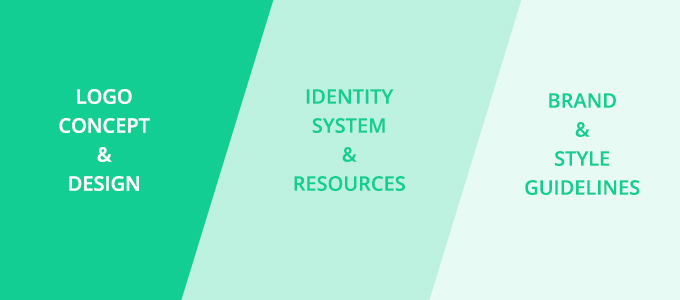
Phase 2: Logo, Identity, & Guidelines


The designing of a logo starts here. First a lot of sketches are drawn and the best ones are chosen and they are redone digitally.


After the new logo is chosen, the identity system starts. Its purpose is to create a visual language around the logo, that can be used in marketing


Then the style guidelines are created, they contain the rules of using the logo and the visual language around it, so that they will send a coherent message and that the marketing and other media visibility will always look the same.


Phase 3: Monitoring & Rebranding

After the brand is created and the logo is set, it is time to monitor the markets and changes in it. By time the target audience will change and the brand has to change with them. The changes should be noticeable but the familiarity and consistency of the brand should be maintained.


10 tips for creating winning visual brand identities by justcreative.com


Challenges in creating visual brand identity

Good examples:
25 Outstanding Examples Of Branding, Visual Identity and Logo Designs:


bad examples:

Coke Color Change


In 2011, Coke withdrew a newly-branded can in the US. Focused on their $3 million pledge to the WWF to help save polar bears, the company launched a white can. Visually, it looked too similar to the Diet Coke alternative, and of course brand confusion set in, customers complained and within one month, the red can returned.


Sources:

tiistai 3. helmikuuta 2015

Trigger 2

IMC


What is integrated marketing communication?


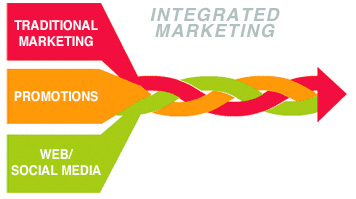
Integrated marketing communication (IMC) is defined by businessdictionary.com as an approach to achieving objectives of marketing campaign, through well coordinated use of different promotional methods that are intended to reinforce each other. (1)

American Association of Advertising Agencies (4A) says that IMC recognizes the value of a comprehensive plan that evaluates the strategic roles of a variety of communication disciplines (advertising, PR, personal selling, and sales promotion) and combines then to provide clarity, consistency, and maximum communication impact. (1)

Stirstuff.com wrote in 2014 a new definition of IMC which to me is more clear than the others, they say that true IMC is the development of marketing strategies and campaigns that combine multiple marketing disciplines (paid advertising, earned media/PR, promotion, owned assets and social media) that are used across variety of media to best fit for the goals of the brand. (2)

So to clarify I would say that IMC is combining different ways of marketing to create a comprehensive marketing plans and strategies for specific brands.

(6)


How to communicate a value proposition through different channels?

According to John Doerr and Michael Schultz, consultants from rainsalestraining.com (3), to communicate your value proposition effectively one should follow a six step guide:


  1.  Target customers. Know them so you can create a message that will affect them
  2. Need/Business problem. Know the needs you are addressing and how you are helping, so that your customers know when to use you/your service
  3. Impact of solving need. What are the impacts of you solving customers needs?
  4. Your offerings. How do you solve problems and run your company and work with customers, in other terms, what is your service approach.
  5. Proof of concept.  How can you show that your approach has worked in solving other peoples problems before and how do people know that what you promise will actually happen.
  6. Distinction.  Why is your offering better than the ones that other ones offer? What differentiates you from them?

Also the 4C's of integrated marketing communication are important to remember.
As stated by Marlene Friis from mindjumpers.com (7) the 4C's are the following:
  1. Consistency. Make sure you are always sending out the same message. Don’t contradict yourself! That can make you lose credibility.
  2. Coherence. Be aware of your entire communication process through different channels. All information should be a part of your overall strategy to ensure alignment.
  3. Continuity. As well as coordinating messages to be consistent and coherent, you must also keep in mind that every channel needs to be monitored – and this should be done on a regular basis to keep up continuity.
  4. Complementary. Lastly, you need to think of how your communication effort come together, so that when the complementary synergy you create overall can exceed any effort.

How to integrate different channels to convey a coherent message? 


(5)

What are challenges in IMC? And how do you manage them? 

Seven top-rated challenges in integrated marketing by Stefan Tornquist from econsultancy (4) are the following: 


Good and bad examples of IMC


Good example of a IMC:
The Redbull stratos jump by Felix Baumgartner was a successful campaign and it combined multiple different marketing disciplines. It was highly visible in print media, social media, print media and it was covered by news stations all over the world.


Sources:

http://www.businessdictionary.com/definition/integrated-marketing-communications-IMC.html

http://www.stirstuff.com/time-to-redefine-integrated-marketing/

http://www.rainsalestraining.com/blog/value-proposition-positioning-statement-and-how-to-create-one/

https://econsultancy.com/blog/62830-seven-top-challenges-to-integrated-marketing/

http://highoctaneboost.com/blog/109/is-integrated-marketing-communication-imc-valuable-to-a-small-business/

http://www.slideshare.net/ProfessorMathur/kotler-chap-16-5what-is-an-integrated-marketing-communications-program


tiistai 27. tammikuuta 2015

Trigger 1

Corporate Communication


I start approaching this subject by trying to explain the definition of corporate communication, then looking at what is included in corporate communication and what is it used for.


Cees van Riel defines corporate communication in his book Essentials of Corporate Communication (2007) as following: 

Corporate communication is a set of activities involved in managing and orchestrating all internal and external communications aimed at creating favourable point of view among stakeholders on which the company depends. 

Claire Koeneman from Hilton+Knowlton Strategies says that the main goal of corporate communication is the advancement and protection of an organizations corporate goals, corporate brand or reputation.

She states that a strong corporate character (brand, reputation and organizational behavior) is an opportunity and an advantage for organizations and it helps them to more effectively engage global audiences, create interactive conversations with target audiences. 


Internal communication

The definition of internal communication by education-portal.com:
"Internal communication is the transmission of information between organizational members or parts of the organization. It takes place across all levels and organizational units of an organization."

External communication

The definition of external communication by education-portal.com:
"External communication is the transmission of information between a business and another person or entity in the company's external environment. Examples of these people and entities include customers, potential customers, suppliers, investors, shareholders, and society at large."

Goals of internal communication

In van Riels book it is mentioned that effective internal communication fulfills four roles:


  • Efficiency: Internal communication is used primarily to disseminate information about corporate activities.
  • Shared meaning: Internal communication is used to build a shared understanding among employees about corporate goals.
  • Connectivity: Internal communication is used mainly to clarify the connectedness of the company's people and activities.
  • Satisfaction: Internal communication is used to improve job satisfaction throughout the company.


Goals of external communication

In short, he goal of external communications is to promote the company and increase revenue.


Communication channels

Internal:
  1. Team meetings
  2. Email
  3. Intranet
  4. Video
  5. Print magazine
  6. Notice boards
  7. Text messages
  8. Events
  9. Open forum
  10. site visits by manager
  11. Web-casting
External

  1. Public relations statements
  2. press releases
  3. marketing materials
  4. commercials
  5. articles and books 
  6. Website

How to create a powerful story

To create a powerful story you should first think of the following things:

People: Who are the people that manufacture your product or provide your service, what makes them special, where do they come from how do they work.

Purchasers: Who are your customers and what makes them special? Why do they buy your product or service? How does your product or service help them? What do they like or hate about your product/seervice?

Product: What is special about your product and the way its made or delivered? What do you do different than your competitors? How or why it was designed the way it is? When was it designed, and how has it changes? Who developed or designed it?

Process: How do you manufacture or structure your product/service? How does the process differ from competitors?

It is also important to keep the story quite simple, as the simpler stories are usually easier to remember. The story doesn't have to be told simply, but the essence has to be uncomplicated (for example grimm brother stories: don't talk to strangers)

A good story is also shareable, so it can easily become viral and as many people see it as possible.


How to use emotion in corporate branding

Emotional branding is a term used within marketing communication that refers to the practice of building brands that appeal directly to a consumer's emotional state, needs and aspirations. Emotional branding is successful when it triggers an emotional response in the consumer, that is, a desire for the advertised brand (or product) that cannot fully be rationalized. Emotional brands have a significant impact when the consumer experiences a strong and lasting attachment to the brand comparable to a feeling of bonding, companionship or love. (Wikipedia)

Examples of ways to use emotions in marketing by Alyssa Gregory:
  1. Create a story about how your product can save a day.
  2. Use past events to stoke fear (if it happened to others it can happen to you)
  3. Make customers feel your service is essential and that the payoff is huge, so clients have no guilt in buying from you.
  4. Show passion and enthusiasm and other emotions when speaking, so customers believe that you speak from the heart.
  5. Make a dramatic video that shares a story that is touching or fear-inducing.
  6. Be inspirational and talk to your prospects one-on-one, walking them through the process of working with you and outlining all they have to gain
  7. Create a character that mirrors your prospects and use it/him/her as your business mascot, providing a familiar touch point, answering questions, and solidifying your brand


Commercial example


Sources: 


Cees van Riel Essentials of Corporate Communication. Routledge, 2007


http://www.hkstrategies.com/service/corporate-communications


http://www.ijirs.com/vol3_issue-5/8.pdf


http://education-portal.com/academy/lesson/internal-communication-in-an-organization-definition-strategies-examples.html


http://education-portal.com/academy/lesson/what-is-external-communication-in-business-definition-strategies-examples.html


http://www.instruxion.com/external-communication/


https://www.melcrum.com/research/strategy-planning-tactics-intranets-digital-social-media/choosing-right-communication


http://smallbusiness.chron.com/importance-business-communication-channels-117.html


http://contentmarketinginstitute.com/2012/10/create-powerful-content-marketing-stories/


http://www.digitalsparkmarketing.com/creative-marketing/better-story/


http://en.wikipedia.org/wiki/Emotional_branding


http://www.sitepoint.com/how-to-use-emotional-marketing/